


Earlier this summer, Wonderstruck® and Harvard Divinity School’s CWSR and Five Books gathered a group of scientists, philosophers, psychologists, theologians, artists and thinkers in Malta around a question that has followed human beings for as long as we’ve been asking questions at all:
What is reality?
We called the gathering Reality: How It Eludes Us, because it seemed that a question this large couldn’t belong to any one discipline. Physics can show us something. Neuroscience can show us something. Philosophy, psychology, mystical experience, art and religion can each show us something too. But none of us gets to stand outside reality and see the whole.
Each of us sees something. No one sees everything.
As I’ve gone back through the conversations, I’ve found myself grouping them into five different constellations around the question. I like thinking of them as constellations because they aren’t really categories. They are relationships between ideas and conversations that, when placed alongside one another, begin to illuminate something we might not see in any one of them alone.
Over the next few weeks, I’ll share those constellations here.
The first brings together my opening reflections; Iain McGilchrist in conversation with Nigel Warburton; and John Vervaeke with Donald Hoffman.
They come at reality from very different directions, but underneath them I hear the same deeper question:
What if reality eludes us not simply because we haven’t studied enough, measured enough, or asked the right questions, but because no single vantage point can ever take in the whole?
And what if the way we look matters as much as what we find?
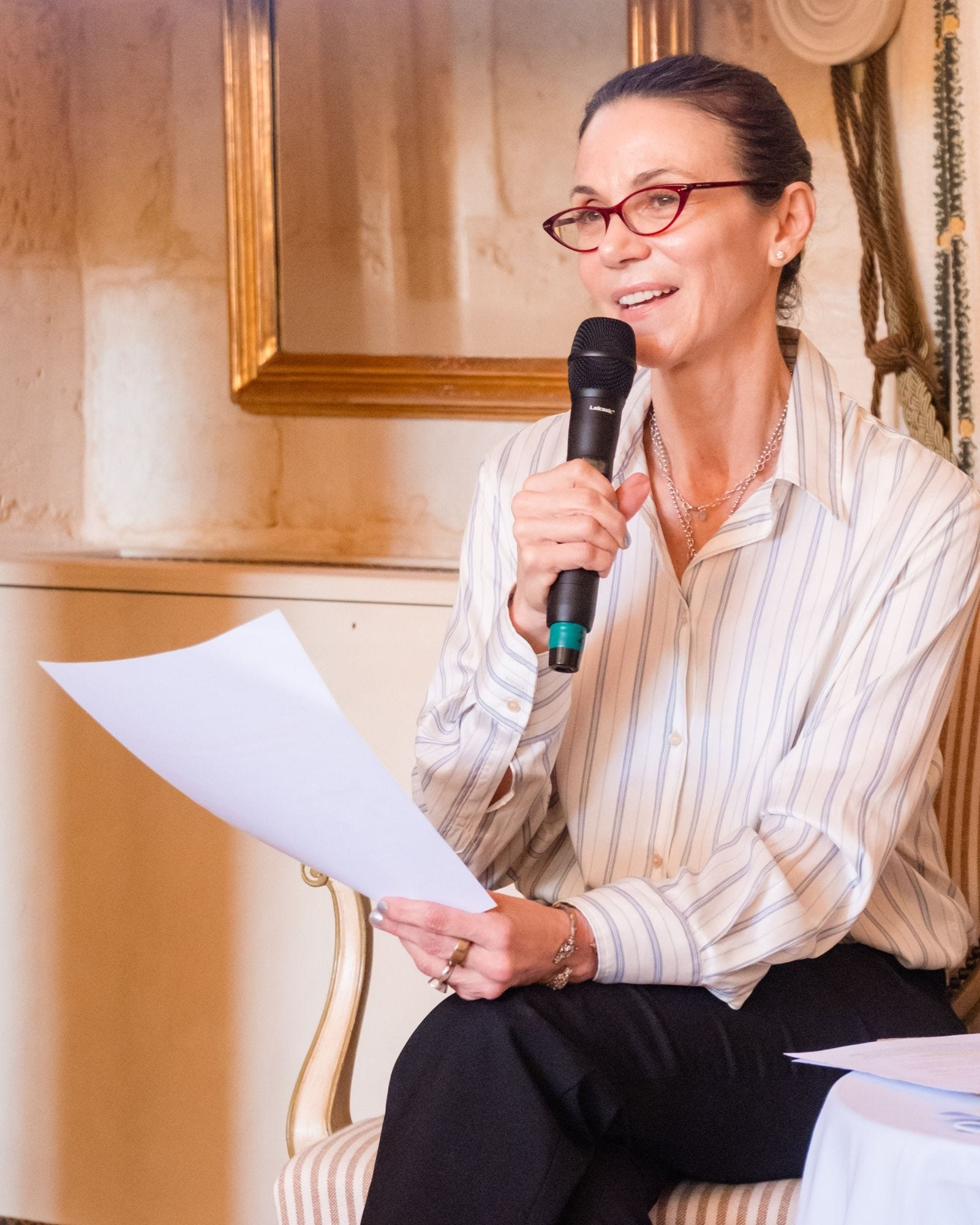
Standing at the Edge
We can map a genome, split an atom, send a signal beyond the edge of our solar system. And still, some of the oldest human questions remain.
What happens when we die? Does consciousness continue beyond the body? Are the people we’ve lost simply gone, or might there be aspects of reality our ordinary senses cannot perceive?
There is a concept from early childhood development called “object permanence” that I keep coming back to. Before a baby develops it, something that disappears from sight can seem to have ceased to exist. Peekaboo isn’t just delightful. It’s almost existentially thrilling. The parent disappears from the universe and then, miraculously, returns.
Sometimes I wonder how far we really are from that baby!
When someone we love dies, when a presence leaves our field of perception, do we quietly equate hidden with gone? Could hidden sometimes mean beyond the reach of our present senses?
I don’t know.
And that I don’t know feels increasingly important to me.
People have experiences that don’t fit neatly within our existing explanations: a felt sense of leaving the body, an encounter with someone who has died, a consciousness that seems, at least subjectively, to extend beyond its usual boundaries. We can argue about what these experiences mean. We should investigate them carefully. But I am not interested in dismissing what we don’t understand simply because it unsettles the picture of reality we already have.
It can be unsettling to near the edge of our understanding as it can feel and be destabilizing.
And yet there is another response available to us at that edge: awe.
Awe allows us to go beyond our need to make the world smaller than it is.
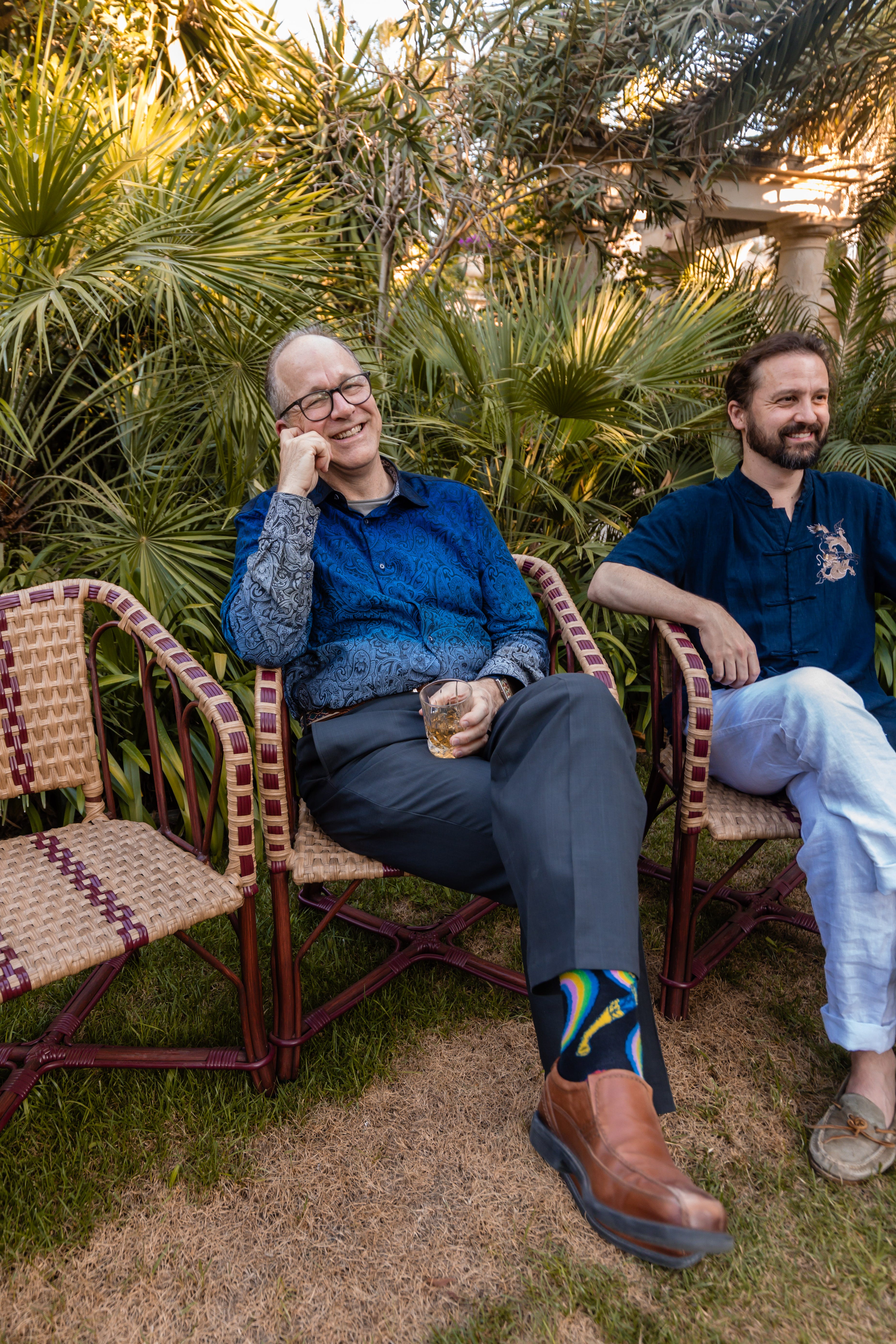
My friend Jeffrey Kripal often reminds me that awe isn’t always lovely. There can be an existential shock within it, the experience of having things flipped upside down and backwards. Awe can contain the awful as well as the awesome. Sometimes, frankly, it is both.
Perhaps that’s because we want two things that don’t always sit easily together. We want to feel fully alive, and we want to feel safe. We want to know reality, and we want to be protected from what knowing might show us.
As I said in the talk that opened our symposium:
Each of us sees something. None of us sees everything.
I’ve come to think that isn’t a limitation to apologize for. It may be one of the most honest things we can say.
The World We Reach Toward
Reality doesn’t seem to sit still and wait patiently for us to discover it.
There is something about reaching toward it that matters. And perhaps something about grasping too tightly that makes us lose it.
In a wonderful exchange, philosopher Nigel Warburton and psychiatrist and philosopher Ian McGilchrist talk about metaphor and the way we come to know the world. We reach toward things that exceed our grasp with the materials available to us: language, attention, imagination, reason.
The danger isn’t that we use metaphors. We couldn’t think without them. The danger is forgetting that they are metaphors and mistaking our description of reality for reality itself.
That distinction feels enormously important to me.
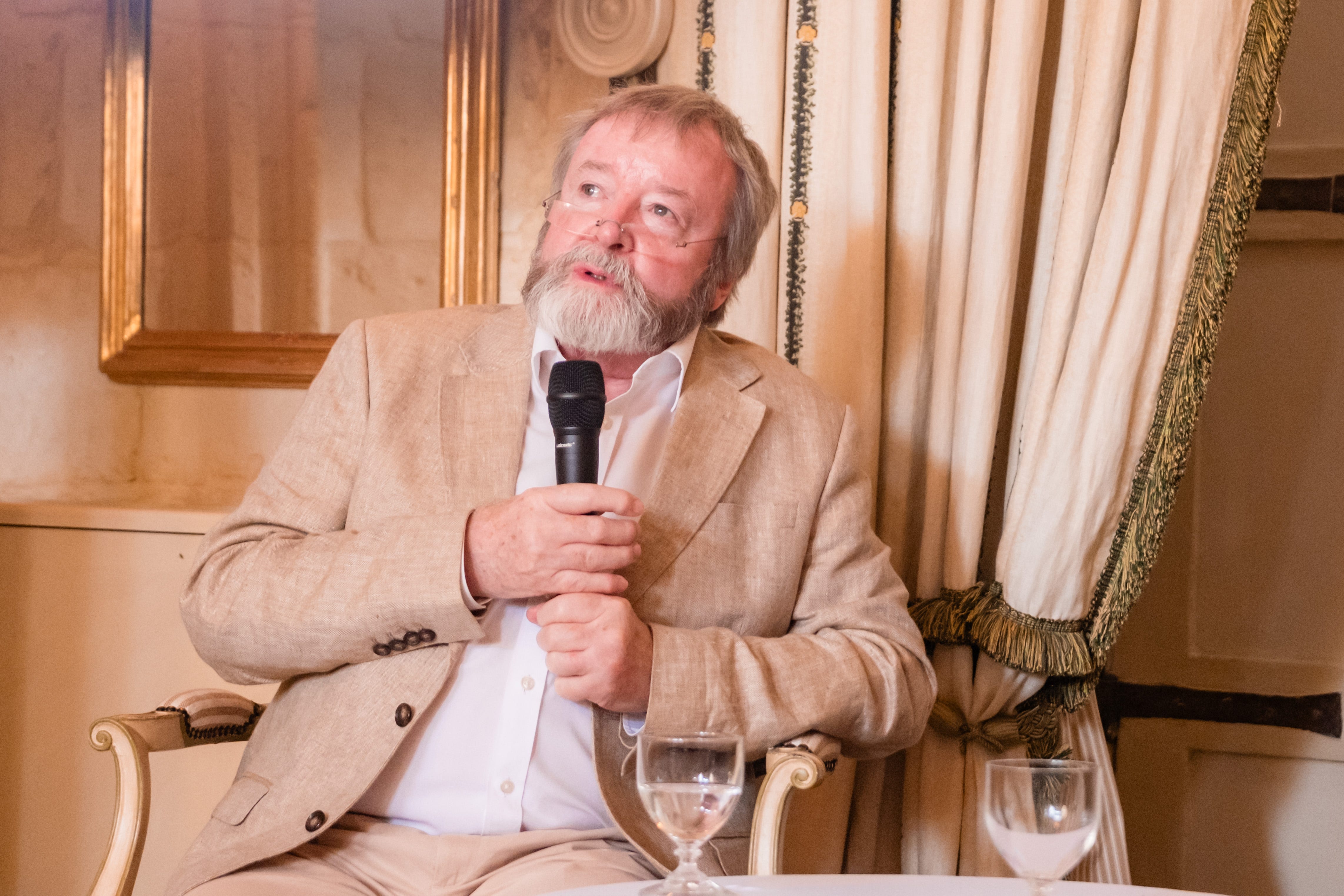
McGilchrist has spent much of his career exploring how the brain’s two hemispheres attend to the world differently, and how those different forms of attention disclose different aspects of what is there.
One mode wants to fix, categorize, isolate and make useful. We need it. It builds bridges, analyzes data and allows us to manipulate the world with extraordinary precision.
But there is another way of attending that is broader and more relational. It understands that living things cannot be fully known by pulling them out of the web of relationships in which they exist.
Focus too tightly on the thing, and you may lose what exists between things.
And so much of life seems to happen there: in relationship, context, movement, ambiguity, the spaces between.
What I love about McGilchrist’s work is that these ways of seeing don’t need to annihilate one another. The larger view can include the smaller one. It can say: yes, that is true. And there is more.
That feels very different from the way we are so often encouraged to think now, where one perspective must defeat another before we can feel secure.
Wisdom has less to do with winning the argument and more to do with becoming capable of holding realities that appear contradictory without immediately forcing one of them out.
And then there is imagination.
One idea from this conversation has stayed with me: imagination is not necessarily an escape from reality. It may be one of the ways we enter more deeply into it.
Fantasy can take us away from what is here. Imagination can allow us to perceive possibilities that our established categories don’t yet have room for.
That distinction matters.
Because if we only permit ourselves to encounter what we already know how to prove, we risk making reality no larger than the instruments we have built to measure it.
Who Is Doing the Looking?
Which brings me to perhaps the most disorienting of these first conversations: cognitive scientist Donald Hoffman in dialogue with John Vervaeke about consciousness and the nature of the real.
For centuries, science has treated space and time as part of the fundamental stage on which reality unfolds. Hoffman asks a much stranger question:
What if space-time isn’t fundamental at all?
What if what we perceive is more like an interface: useful, adaptive, necessary for navigating the world, but not a transparent window onto whatever reality ultimately is?
His metaphor is a virtual-reality headset.
Think about the icon of a file on your computer. The icon is useful. You can move it, open it, throw it away. But nobody imagines that the little blue folder on the screen is what the file really is. It is an interface that allows us to interact with something whose underlying complexity would otherwise overwhelm us.
Hoffman wonders whether perception works in something like the same way.
Maybe what we see isn’t false. Maybe it simply isn’t the whole story.
And then the questions get much stranger.
If every experience of reality is mediated through perception, what exactly is the relationship between the world and the consciousness perceiving it? What is an observer? Can consciousness itself be reduced to the physical world we perceive, or have we somehow put the cart before the horse?
Hoffman’s own proposals go much further, toward the possibility that consciousness may be fundamental and that what we experience as separate selves could be expressions of something far larger.
This is where I find myself thinking:
Wait. What?!
And also: keep going.
What if we are not simply tiny observers looking out at an enormous, indifferent universe?
What if consciousness and reality are entangled in ways we haven’t begun to understand?
What if the separateness we experience so convincingly is real at one level and radically incomplete at another?
I don’t know that Hoffman is right. I’m not sure that is even the most interesting question for me.
What interests me is what becomes possible when we are willing to stand inside the question without immediately rushing to close it.
What This Asks of Us
Across these first three conversations, a shape begins to emerge.
Reality may be far less fixed, separate and easily grasped than we imagine. Attention matters. Relationship matters. The observer matters. The questions we ask matter. And imagination, rather than being the enemy of serious inquiry, may have a legitimate place alongside reason in helping us reach toward what we don’t yet understand.
None of this means abandoning rigor.
For me, it means becoming more rigorous about our uncertainty.
It means resisting two temptations at once: believing everything because it is mysterious, and dismissing everything mysterious because we cannot yet explain it.
There is a much more interesting place between those two positions.
Wonderstruck lives there.
I increasingly think of it as a place where we can allow the measurable and the mysterious, skepticism and openness, science and lived experience to remain in conversation without demanding that one destroy the other.
What is available is curiosity. Attention. Imagination. Relationship. The willingness to encounter something that might change us.
Everyone sees something. No one sees everything.
That is the invitation not the flaw in the design.
To stay curious beyond the edge of what feels safe. To resist grasping too quickly for certainty. To let what we don’t understand remain alive long enough to surprise us.
And perhaps to meet the mystery of being here with something closer to wonder than fear.
There is more waiting in each of these conversations: more of what Iain has to say about truth, metaphor and relationship; more of what Donald means by the headset we’re all wearing; and more of what all of this might quietly ask of us in the ordinary experience of an actual life.
I don’t expect these conversations to give us an answer to what reality is.
I hope they do something more interesting.
I hope they change the way we look.
— Elizabeth
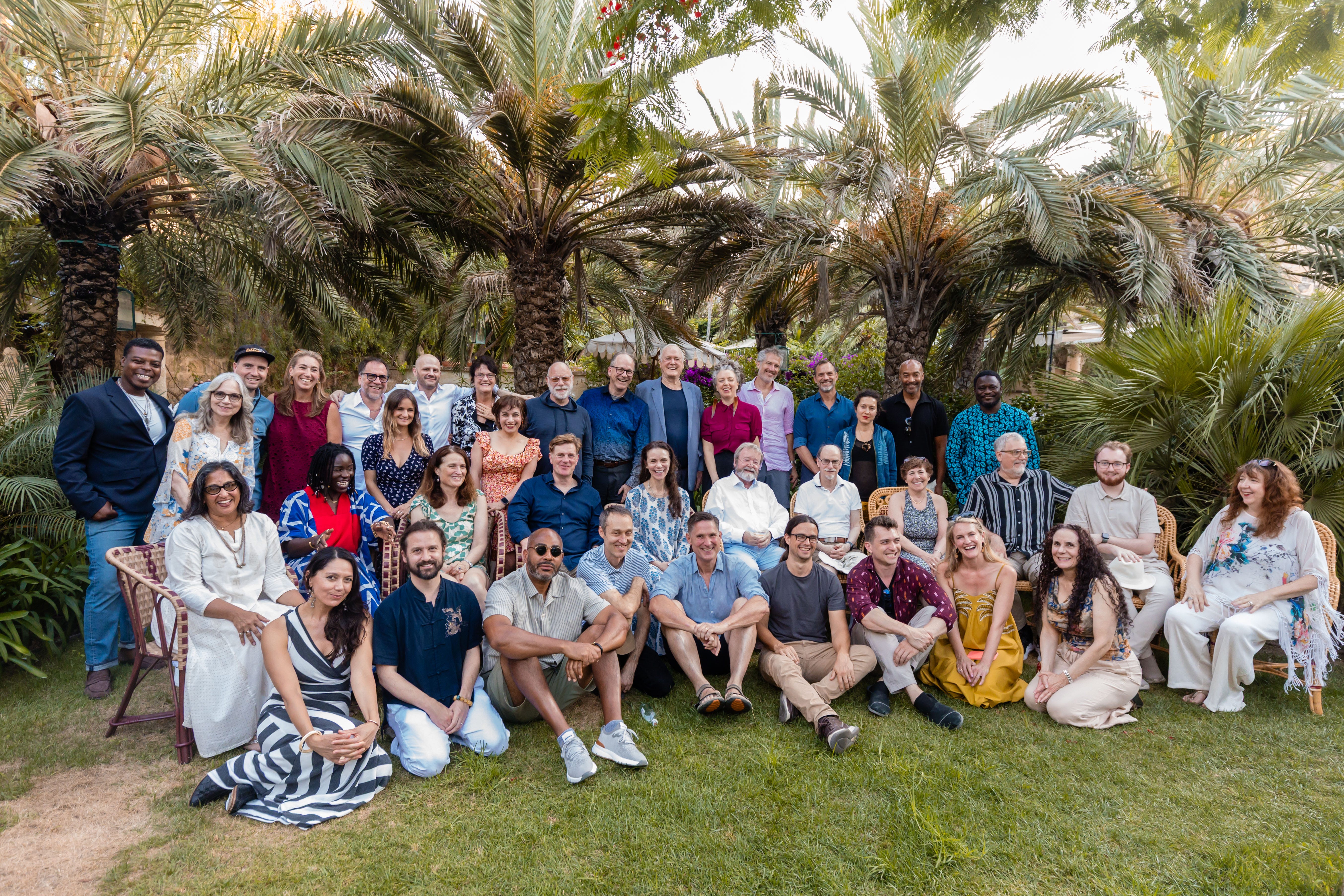
Super excited to dive into this series.