



For the past several weeks, we’ve been sharing the first constellation of conversations from the Wonderstruck Symposium series Reality: How It Eludes Us, recorded in Malta. Together, these conversations returned to a central insight: each of us sees something, no one sees everything, and the way we look may matter as much as what we find.
But this raises another set of questions. What happens when the versions of reality we’ve inherited no longer make sense? How do we navigate the space between old models breaking down and new ones not yet formed? And who has the authority to determine what comes next?
These questions lie at the heart of our second constellation, as we turn from the limits of what we can know to what happens when our understanding of reality itself begins to break open.
Where Reality Cracks
Throughout history, discoveries in science, philosophy, and the arts have challenged our understanding of the world. What once seemed certain gives way to new ways of seeing, often bringing profound changes in how we understand ourselves and our place in the universe. Yet something about our present moment feels different. The speed and scale of change are extraordinary, and many of the institutions and assumptions that once provided a sense of stability seem increasingly fragile.
In his opening provocation, When Models of Reality Break, philosopher Bayo Akomolafe invites us to reconsider what happens when our familiar ways of understanding the world begin to fracture. He suggests that every model of reality depends, in part, on what it excludes. In order to establish a coherent picture of the world, we inevitably leave things out. But those excluded elements don’t disappear. Bayo calls the realm in which they persist the paraterranean, a hidden dimension where the seeds of a model’s eventual transformation may already be taking root.
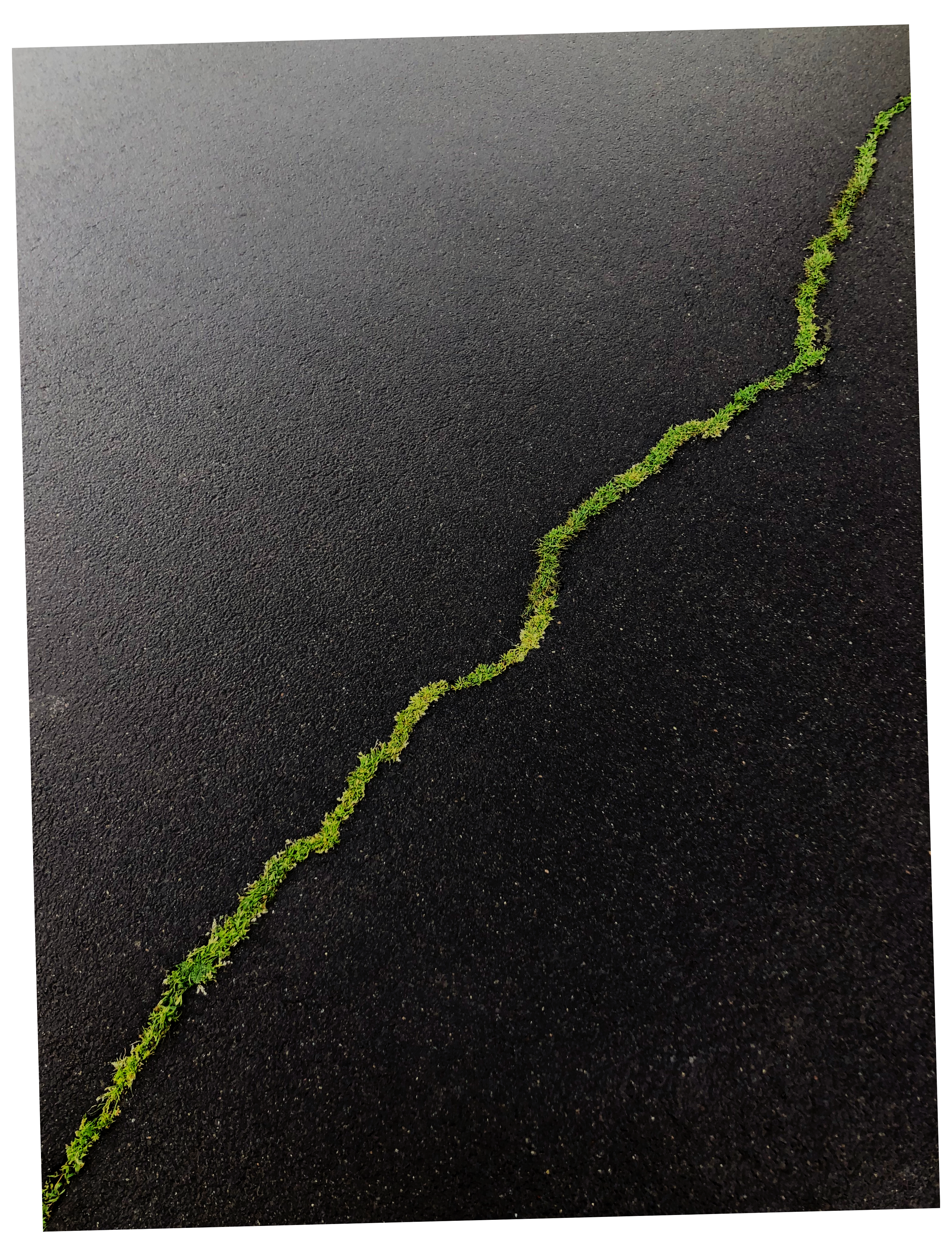
I keep thinking about the image of a plant growing through a crack in the pavement. Something alive pushing through a surface designed to contain it. We tend to think of cracks as signs of weakness or failure, something to repair before the structure collapses. But perhaps a crack can also be an opening, revealing what has been present all along but unable to emerge.
Bayo challenges our instinct to restore certainty when the ground beneath us begins to shift. Rather than immediately trying to close the cracks, he asks what might happen if we remained with them, allowing ourselves to encounter what our established ways of thinking have kept outside.
This brings to mind the Sufi poet Rumi, who wrote in the Masnavi: “Sell your cleverness and buy bewilderment. Cleverness is mere opinion, bewilderment is vision.” There are different translations of the final word, including “intuition,” but the distinction Rumi makes is striking. There is a kind of cleverness that organizes and categorizes the world, and another way of knowing that begins when those familiar categories are no longer sufficient.
Reason is essential to how we understand the world, although it cannot encompass the fullness of our experience. Bewilderment, in Rumi’s sense, invites us to engage with what remains beyond our understanding. I find that a compelling way to think about the uncertainty of our own moment.
Unbound by Wonder
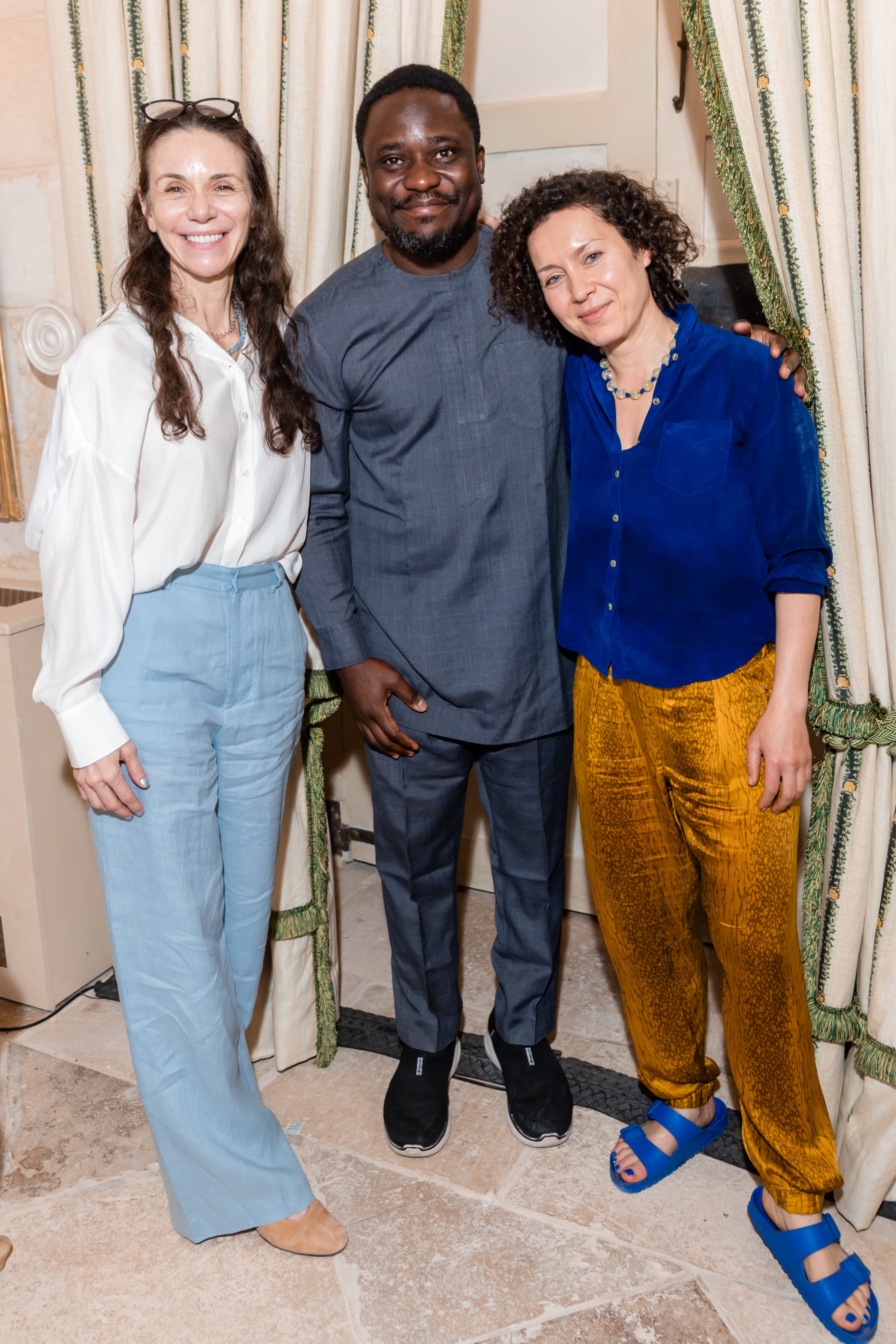
In the conversation Reality and Disruption, Bayo is joined by Maria Popova, whose reflections take us from the instability of our shared models of reality to something more intimate: the stories we construct about ourselves.
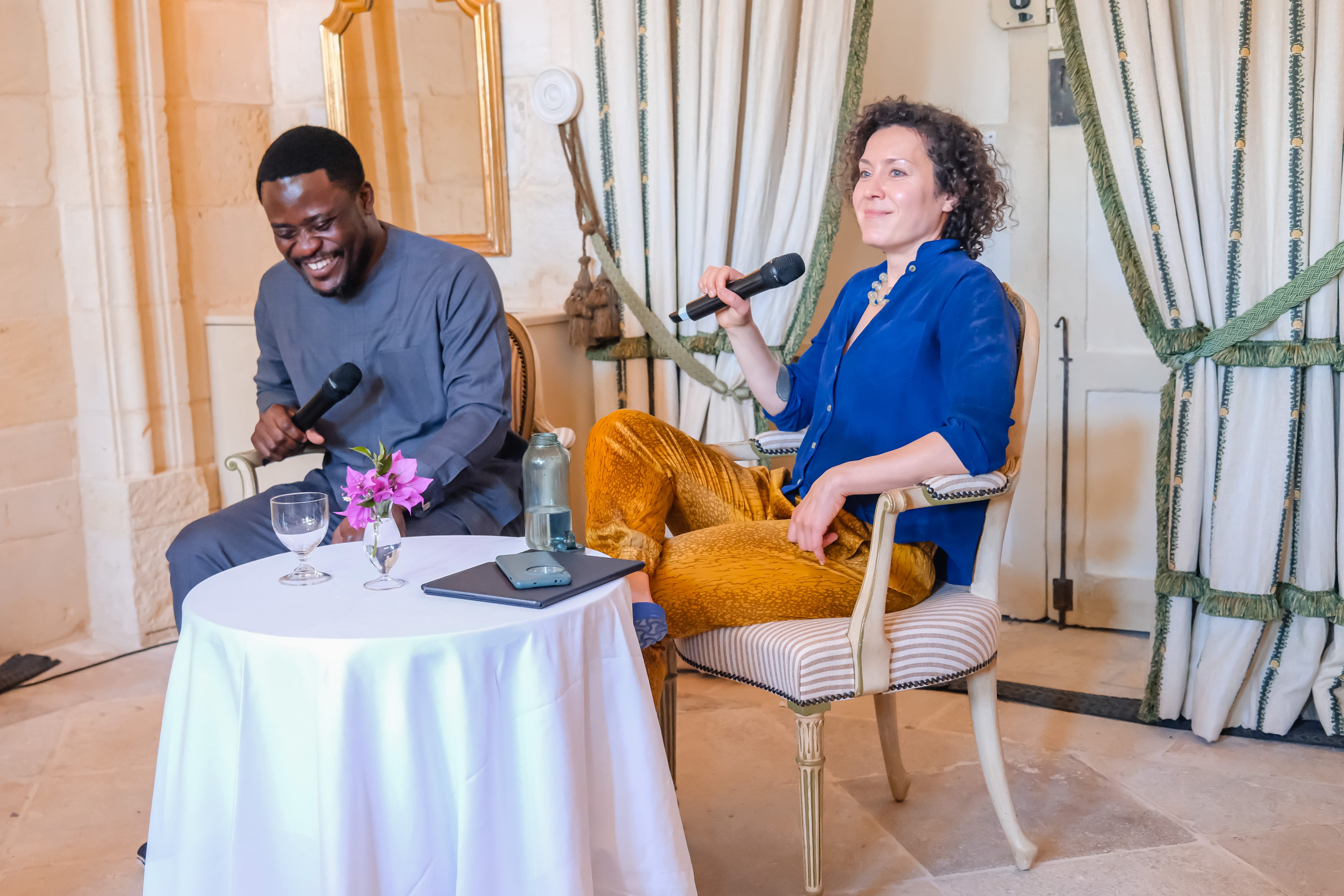
Maria draws on the philosopher and novelist Iris Murdoch’s idea of unselfing, the experience of having our attention drawn so completely toward something beyond ourselves that our usual preoccupation with the self momentarily falls away. A work of art, a piece of music, or an encounter with the natural world can interrupt our habitual sense of being separate, self-contained individuals. In these moments, we may experience a sense of connection to something larger than ourselves.
As a psychologist, I find this especially compelling. We spend much of our lives developing and protecting a coherent sense of self. Identity provides continuity, meaning, and a way of navigating the world. Yet there is also something extraordinary about those moments when its boundaries become less rigid, when we are no longer so occupied with maintaining the familiar story of who we are, or perhaps who we think we are.
Maria suggests that the self may be one of the most elaborate stories human beings have created. Her reflections raise a question that seems closely related to Bayo’s provocation: if our understanding of the world is shaped by the boundaries of our models, how much of our experience is also shaped by the boundaries we place around ourselves?
Here I think of John Keats and his idea of negative capability, the capacity to remain “in uncertainties, Mysteries, doubts, without any irritable reaching after fact & reason.” Keats was describing a quality he admired in great poets, an ability to remain receptive to experience without forcing it into a fixed interpretation. His idea resonates with Maria’s account of unselfing. Both suggest that something may become available to us when we loosen our attachment to certainty, whether about the world or about ourselves.
Keats also believed that the poet had no fixed identity but was continually entering imaginatively into the lives and experiences of others. I find that a beautiful thought, particularly in relation to wonder. Our capacity to encounter something beyond ourselves may depend, at least in part, on our willingness to become less certain of the boundaries that define us.
Taken together, Bayo and Maria’s conversation opens a larger question. What if the uncertainty we feel in a world undergoing profound change has as much to do with the limits of how we have learned to see ourselves and our place within it as with the changes themselves?
Who Gets to Define Reality?
If our understanding of reality is shaped by what we include and exclude, and by the stories we tell about ourselves, another question inevitably follows: who decides which interpretations of reality are legitimate?
This was the central concern of Who Gets to Define Reality?, a panel moderated by Rogan Kersh with Alexander Beiner, Brian O’Kelley, Dean Radin, and Srinija Srinivasan.
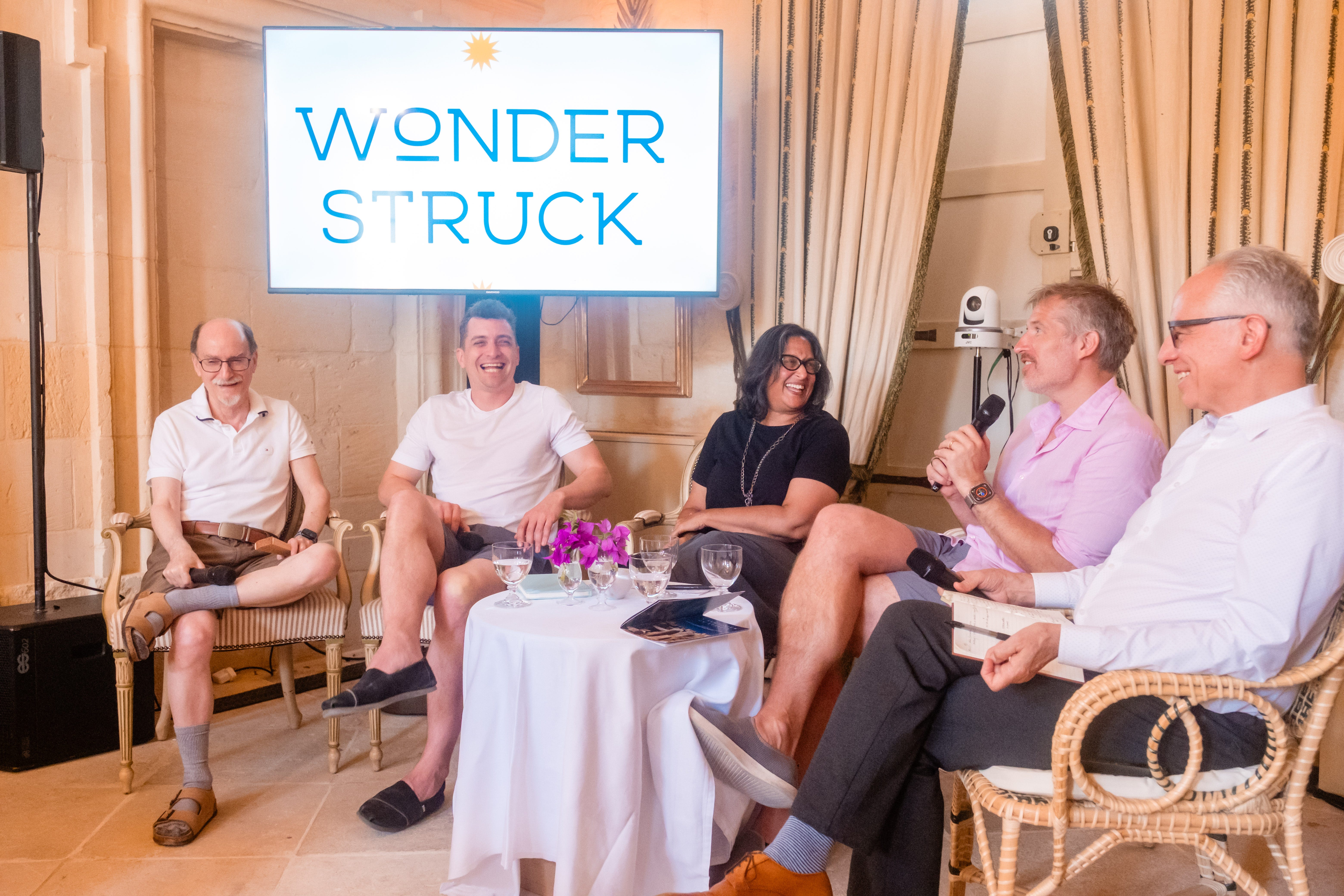
Their conversation explored the often invisible forces that shape what we collectively accept as true: scientific institutions, research funding, the media, technological systems, and the cultural expectations that determine which ideas are taken seriously. We tend to think of reality as something independent of human judgment, yet our shared understanding of it is profoundly influenced by the structures through which knowledge is produced, validated, and communicated.
Alexander Beiner brought this question of authority into a wonderfully strange and rather personal encounter. Traveling through the English countryside, he came across an animal resembling the mysterious large cats reported by the Alien Big Cat Society, creatures that, according to conventional understanding, shouldn’t be roaming the British countryside. What makes the story so interesting is that Ali himself hesitated to tell it. He wasn’t entirely sure what he had seen, but he was acutely aware of what admitting the experience might do to his credibility.
Here is someone who has devoted himself to exploring the boundaries of accepted knowledge, yet even he felt the pressure to remain within them. How much of what we accept as reality is determined by what we feel permitted to say we’ve experienced? Credibility, as Ali suggests, is a currency, and we are often unwilling to risk it.
The same tension appears in scientific inquiry. Dean Radin’s research into anomalous and psychic phenomena occupies territory that remains controversial within mainstream science. He pointed to the changing public treatment of unidentified aerial phenomena as an example of how quickly the boundaries of acceptable discussion can shift. An observation once dismissed as implausible can become a subject of serious inquiry when institutions and cultural authorities begin to treat it differently.
Scientific rigor demands evidence and skepticism. It also requires the freedom to investigate questions that challenge prevailing assumptions. Throughout the history of science, accepted explanations have been revised, overturned, and sometimes abandoned altogether. What we consider credible is shaped by the knowledge available to us, along with the institutions and cultures that determine which questions are worth asking.
I find myself returning to a question that runs through so many of our Wonderstruck conversations: can we remain intellectually rigorous while also remaining genuinely open to what we do not understand? There is a danger in mistaking the boundaries of accepted knowledge for the open horizon of reality itself.
Humanity in the Age of Intelligent Machines
The panel carried these questions into an increasingly urgent discussion about artificial intelligence and the profound changes it may bring to our understanding of the world.
Brian O'Kelley raised a rather startling possibility: what if the greatest threat to governments is a future in which we no longer need them? As technology increasingly connects people across national borders, the institutions that have organized our political and economic lives may begin to lose their authority. We are moving toward a world for which we don’t yet have a language, and Brian readily admitted that he cannot see where it leads.
I find this both fascinating and unsettling. Governments, economies, even national borders are structures we tend to regard as permanent features of reality. Yet they are also human arrangements, shaped by history and sustained through collective agreement. As technologies transform how we communicate, exchange value, and organize ourselves, the foundations of political authority may be shifting beneath us. Who then holds power, and who is responsible for the world that emerges?
These questions become even more pressing as artificial intelligence takes on a growing role in our lives. We are already asking machines to make decisions, generate knowledge, and predict outcomes. The implications reach into science, education, government, and our most ordinary daily choices. Who takes responsibility when an AI system makes a mistake? Who determines the values and assumptions built into these systems? And how do we preserve our capacity to think and choose independently as we become increasingly reliant on them?
As we give these technologies more authority over our lives, I wonder how much of our own judgment, imagination, and agency we risk giving away.
Srinija Srinivasan offered a particularly thoughtful perspective on this. She reminded us that predictive AI models are built from data about what has already happened. However extraordinary their capacities may become, they are trained on the past, while the future remains open to the choices we make. Human beings have the capacity to imagine possibilities beyond established patterns, guided by qualities that are difficult to reduce to a predictive model.
Srinija urged us to preserve “the depth and weirdness of our humanity,” including the wisdom, compassion, intuition, and humility that shape how we choose to live.
There is something extraordinary about the unpredictability of being human, our capacity for imagination, our encounters with mystery, and the experiences that resist easy classification. As we develop systems capable of modeling more and more of our world, I wonder what aspects of our humanity may become increasingly difficult to recognize or value.
The Mystery That Remains
These questions remind me of William James, the philosopher and psychologist whose work has long fascinated me. James approached the mysteries of human experience with an unusual combination of scientific discipline and intellectual openness. He investigated séances, trances, automatic writing, religious experiences, and altered states of consciousness because he believed that experiences which challenged accepted explanations deserved serious attention.
In The Varieties of Religious Experience, James suggested that our ordinary waking consciousness is only one particular form of consciousness, and that other forms may exist just beyond it, separated by thinnest of screens.
What I have always admired about James is his willingness to take experience seriously without claiming to know in advance what it meant. He devoted decades to investigating phenomena that resisted easy explanation, and his sense of mystery only deepened.
“Our science is a drop,” he wrote, “our ignorance a sea.”
Perhaps this is where the conversations of our second constellation ultimately meet.
Bayo asks us to consider what emerges through the cracks in our established models of reality. Maria invites us to explore what happens when the boundaries of the self become less fixed. And our panel examines the forces that determine what we collectively recognize as real, at a moment when artificial intelligence may fundamentally transform how knowledge is created and understood.
Across these conversations, I hear a shared concern with the limits of our understanding and the extraordinary possibilities that may lie beyond them. Our models of reality allow us to navigate the world, but they also shape what we notice, what we overlook, and what we consider possible. The assumptions we inherit can become so familiar that we forget they are assumptions at all.
There is something both unsettling and liberating about recognizing this. It asks us to cultivate a certain humility toward what we think we know, alongside the curiosity and imagination to venture beyond it. Keats called this negative capability. Rumi spoke of bewilderment. James approached it through an almost inexhaustible curiosity about the mysteries of consciousness and experience.
For me, wonder belongs here. It opens us to experiences that exceed our familiar explanations and reminds us that the world may be far stranger, more complex, and more extraordinary than we have imagined.
I hope you’ll join us for these conversations and share what they stir in you.
— Elizabeth

Join us at Wonderstruck, where bewilderment becomes belonging and awe might just change the way we see.