


Our solstice newsletter is a guest piece by Donna Mackay on our Wonderstruck team. I love paradox and am sure you'll enjoy the beauty of this beautiful presentation. Happy Holidays everyone!
- Elizabeth
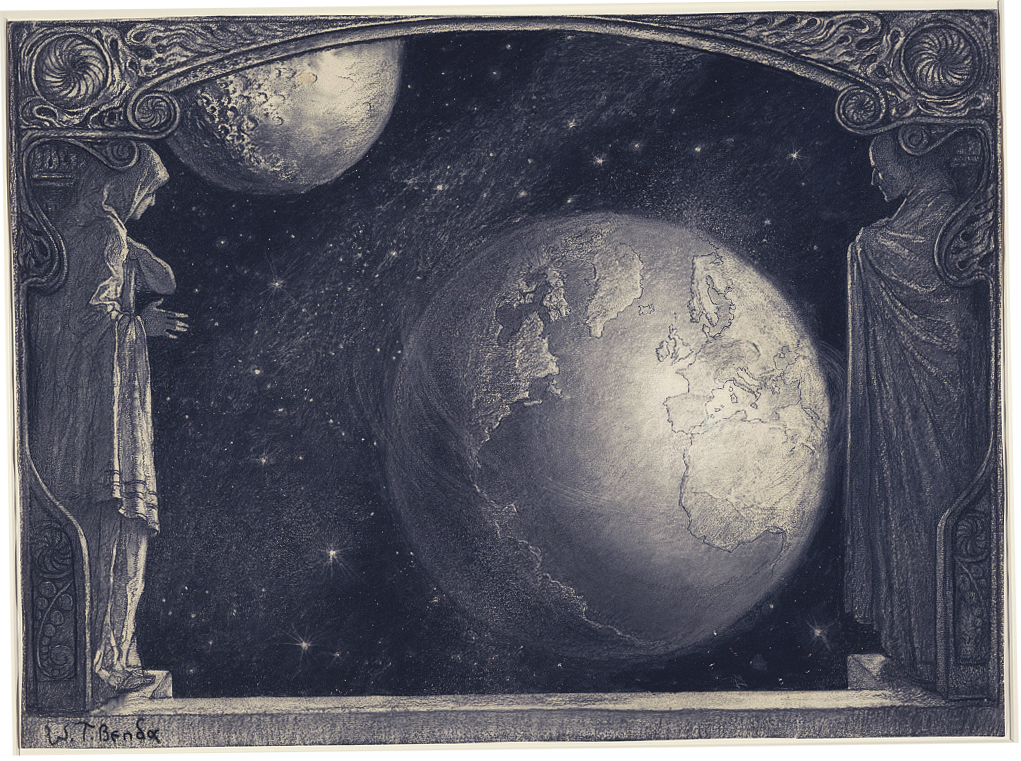
At a Wonderstruck year-end team meeting this week, we gathered from the West Coast of Southern California to the Eastern Seaboard around New York and across the pond to England for a “fireside” chat around the glow of our computer screens. It was here that we became present with Winter. In real time, we could see the turning of the Earth. In California, the room began to brighten. In London, we could see darkness beginning to penetrate the windows. The longest night of the year was imminent. We turned to the topic of the solstice and contemplated the poem by Rebecca Parker:
… In the immense darkness
everything spins with joy.
The cosmos enfolds us.
We are caught in a web of stars,
cradled in a swaying embrace,
rocked by the holy night,
babes of the universe.
Let this be the time
we wake to life,
like spring wakes, in the moment
of winter solstice.
Excerpt from Rebecca Parker’s Winter Solstice Poem
We considered our paradoxical relationship to the dark. From the shadowy dangers in fairy tales by the Brothers Grimm to the Duffer Brothers’ creepy and colorless “Upside Down” in Stranger Things, we are warned to rush away from the darkness or be consumed.
Not so fast, argues Clark Strand, author of Waking Up to the Dark: Ancient Wisdom for a Sleepless Age. The dark of night, he reminds us, is a holy time when we can tend to our souls. Before the 24/7 availability of artificial light, our ancestors experienced “a darkness so luxurious it teased visions from the mind and divine visitations that helped guide their course through life.”
Katherine May turns winter from a noun into a verb in Wintering: The Power of Rest and Retreat in Difficult Times. With a reverent nod toward the dark repose of the season, she writes, “The changes that take place in winter are a kind of alchemy, an enchantment performed by ordinary creatures to survive…” The innate sense to hibernate in the more-than-human world resonates with us as well. She writes, “Winter is not the death of the life cycle, but its crucible. It’s a time for reflection and recuperation, for slow replenishment…”
We relish the beautiful, metaphoric language that honors the sunless recesses of our experience. Our philosopher friend, Bayo Akomolafe, introduced us to the Inuit word qarrtsiluni, translated as “sitting together in the darkness, waiting for something to happen, to break or burst forth.” Naomi Shimada writes that qarrtsiluni is a ritual “for deep listening, for attunement to what is emerging, for the space before something takes form.” Valerie Kaur taps into fertile ground and asks what if “darkness is not the darkness of the tomb, but the darkness of the womb?” Rilke writes of the spaciousness of unlit realms: “You, darkness, of whom I am born / I love you more than the flame that limits the world / to the circle it illuminates / and excludes all the rest.”
Still, we grasp for the light in the symbolic suns we’ve crafted in our religious traditions. We gather around the menorah candles of Hanukkah, the clay lamps of Diwali, and Christmas lights on evergreens. According to Irish legend, St. Patrick added a circle to the Celtic Cross for the sun-worshiping pagans he was trying to convert.
Perhaps the winter solstice is a solution to the paradox, and the longest night of the year is meant to be a sanctuary where we can visualize the resilient spark of our spirit. This is the luminescence Hafiz writes about in his poem: I wish I could show you / When you are lonely or in darkness / the astonishing light of your own being. And then, as Parker writes, “we wake to life” with the renewed sense of our place in the universe.
— Donna Mackay

"Perhaps the winter solstice is a solution to the paradox, and the longest night of the year is meant to be a sanctuary where we can visualize the resilient spark of our spirit." Thank you for sharing, Donna.
Beautiful! This really resonates with me. Thanks, Donna!