



This week on Wonderstruck, I sit down with scientist and storyteller Monica Gagliano for a conversation that is immediate, arresting, and alive. There is no warm-up, no small talk, just presence. Almost immediately, she offers an image that stays with me long after our conversation ends.
Imagine a thousand-year-old oak tree.
Now imagine us, living optimistically to a hundred years.
Think of everything that tree has seen. Civilizations rise and fall. Weather patterns shift. Species come and go. Sitting with that image, something in me loosens. My sense of scale changes. The world feels larger, older, and more alive. It gently, but firmly, reframes our place within it.
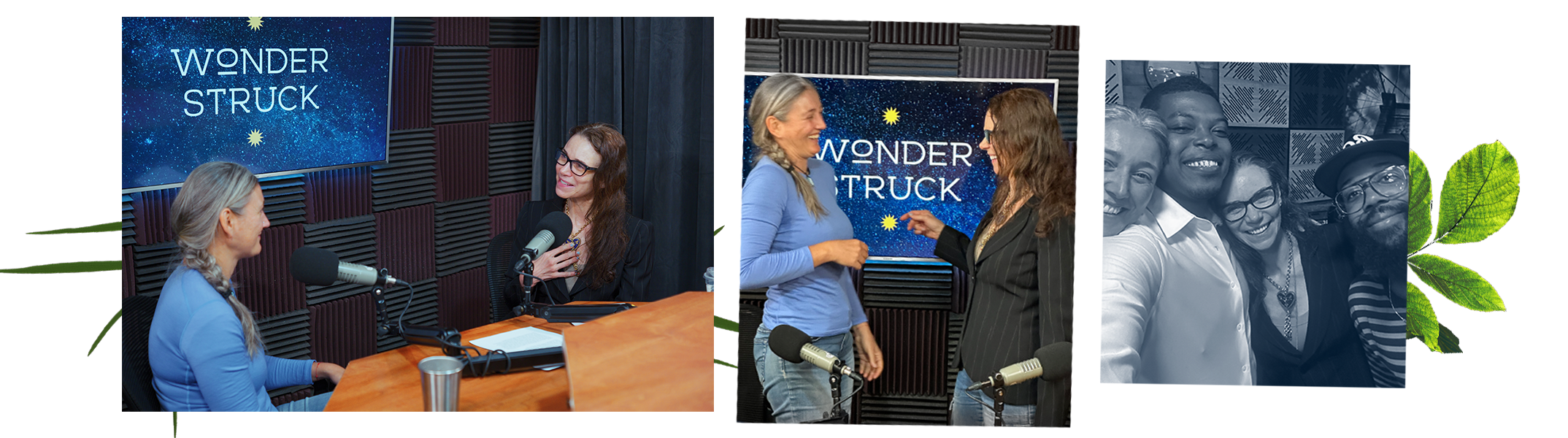
Monica and I speak about the natural sacred. I say the natural is sacred, and she says the sacred is natural. “It’s just natural”, she says. For her, it simply is sacred. There’s no need to name it. For me, I’ve come to love the phrase the natural sacred. It feels beautiful to say. Either way, the meaning is the same. The sacred is not something separate from the natural world, but inseparable from it.
We haven’t lost touch, she suggests, because nature disappeared, but because we’ve surrounded ourselves with constructed realities that drown out its voice. What Monica is calling for is reconnection. A remembering.
At one point, Monica recounts meeting a tree in Australia, not as a metaphor, but as a relationship. The tree asked her to sit with it. It recognized her ancestors. It remembered her laugh. As she speaks, I notice myself listening differently, less with my mind, more with my whole body.
Stories like this can unsettle conventional scientific framing, and that discomfort feels intentional. Monica’s work continually challenges the idea that plants are passive background life. They are communicative. They coordinate. In one study, trees responded collectively to a solar eclipse, synchronizing their behavior much like a flock of birds shifting direction at once, the one that is the many.
“The word is more-than-human,” she says.
And more-than-human is not a who, but a place, a field of relationship we step into. When we connect with another person, a dog, a plant, or any living being, we become more than who we think we are. Connection itself expands us. As Roman Krznaric reminds us, empathy is not just a feeling. It is a form of perception.
This way of seeing extends naturally into how Monica thinks about science. She doesn’t reject it. She calls it back to its roots.
Plants don’t have eyes like we do, yet they see. How? It’s a question, she notes, that is rarely asked, not because it lacks importance, but because it doesn’t fit easily within existing frameworks. Plants are masters of light. They manipulate it. They live by it. They eat it.
One of the most powerful moments in our conversation comes when Monica reflects on leaving academia. She doesn’t describe it as rebellion, but as a return to integrity, to listening, to a way of working that allowed her to be changed by what she was studying. It was the moment she stopped interrogating nature and allowed nature to question her instead.
From there, everything shifts. Plants become collaborators. Teachers. Humor and mysticism sit comfortably alongside rigor and care.
As our conversation comes to a close, I find myself thinking of something historian Arnold Toynbee once observed, that civilizations rarely collapse by murder, but by suicide.
When we sever ourselves from the living world, we sever a part of ourselves.
And yet, listening to Monica, it doesn’t feel hopeless. It feels invitational.
The many is one.
The invitation is still open.
We belong here more intimately than we remember.
I can’t wait for you to experience this conversation.
— Elizabeth

We’d love to know what you think of the episode. Drop us a comment on YouTube, Apple Podcasts, Spotify, Instagram, or here on Substack. Thanks for listening with us.

Did You Know…
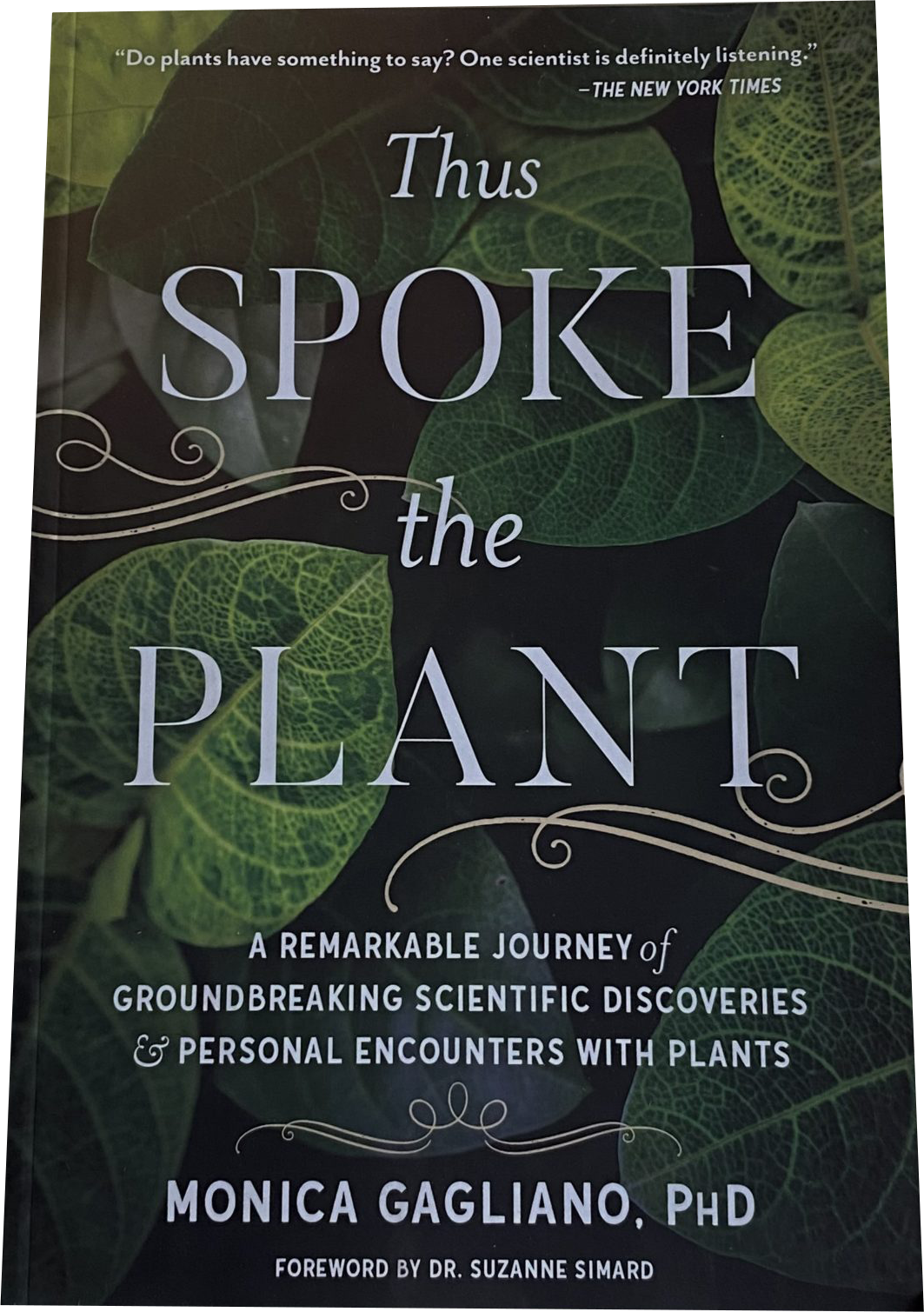
✦ Did you know that Monica’s book Thus Spoke the Plant grew out of both scientific experiments and direct conversations with plants? The book traces her journey beyond the laboratory and into forests, dreams, and Indigenous plant teachings where plants became not just subjects of study, but teachers.
✦ Did you know some “forests” are actually a single being? Clonal trees share one vast root system, sprouting many trunks that are all one organism, some surviving for tens of thousands of years. They aren’t just old. They are ancient life resting beneath the soil.
✦ Did you know plants have personalities? In studies, individual plants show “shy” or “bold” tendencies, some rush to send alarm signals, others hold back. Fennel pushes neighbors away, while basil grows like a friend. The plant world has quirks and characters all its own.
✦ Did you know plants can recognize family? Some species compete fiercely with strangers but soften around kin, sharing space and resources instead of battling underground.

I love when you wrote that listening to Monica 'doesn’t feel hopeless'; I totally share that sentiment. This essay, and the episode itself, filled me with such a sense of peace and calm. Going to pick up a copy of Monica's book today!