


George’s story doesn’t begin with clarity or confidence. It begins with anxiety, the kind that makes it hard to function, to plan, or to imagine a future that feels inhabitable. In his early twenties, anxiety and depression moved through his days not as passing moods, but as something heavier, something he couldn’t seem to outrun. Like many young people, George believed the answer might be strength. If he could become tougher, more disciplined, more formidable, perhaps the anxiety would finally back off.
Inspired by a video of Shaolin monks doing back flips and smashing things, he decided to become a Kung Fu master, and he didn’t intend to pursue it halfway. With a single backpack, he bought a one-way ticket to China and headed for the Wudang Mountains. The plan was simple, shaped by the hope that becoming stronger would quiet the turmoil inside.
What he found instead was hardship, a temptation to quit and confusion made heavier by the language barrier.
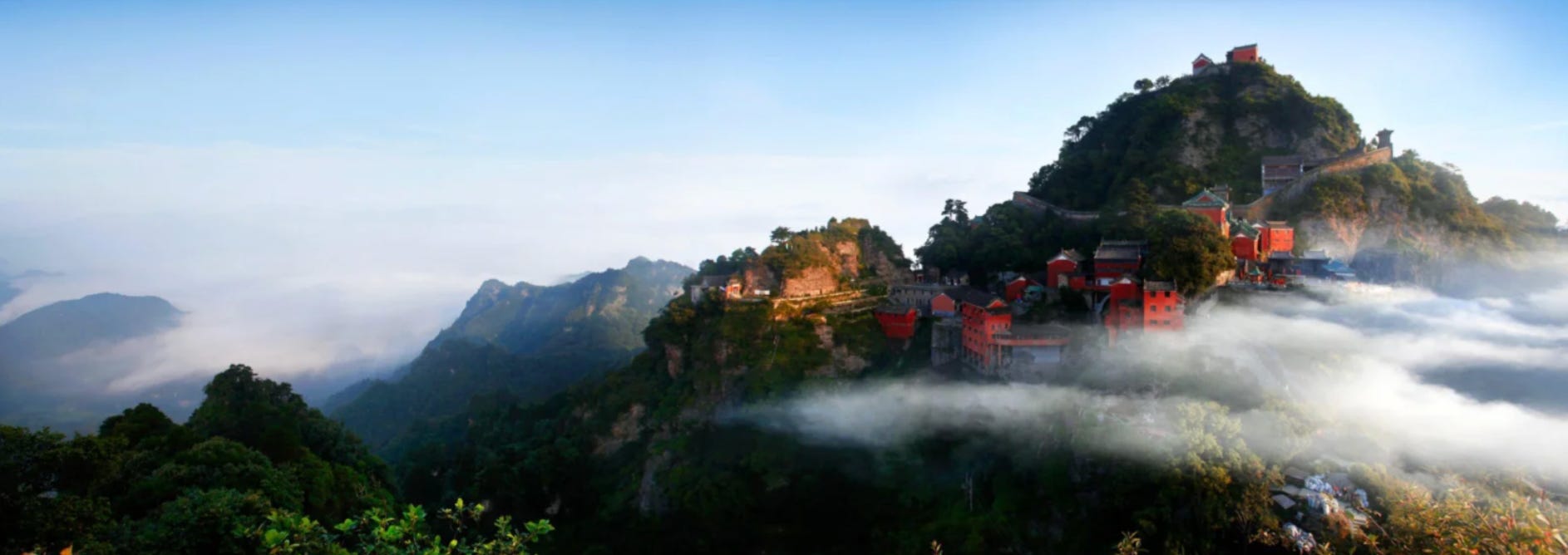
Taking pity on him, a local man eventually led George to a small school run by Master Gu, the only monk on the mountain who spoke English and what turned out, surprisingly, to be a Tai Chi school. Nothing ceremonial. Nothing dramatic. Just simple huts, a couple students and a way of training that was almost the opposite of what he had imagined strength would require. Life in the mountains was sparse. Cold winters. Wooden planks for beds.
And yet, this is where something unexpected took root.
Tai Chi didn’t make George stronger in the way he thought he needed. It didn’t erase anxiety or offer a clean solution. Instead, it slowed everything down. Through repetitive, circular movement, George began to relate differently to his inner world. Anxiety stopped being an enemy to overpower and became something to listen to. Balance appeared not as control, but as the ability to meet each moment as it arrived.
The difficulty wasn’t a mistake. And it wasn’t a shortcut either. George did push himself. He did endure discomfort. But what changed was how he met it. Strength stopped meaning force and started meaning presence. And in that presence, something soft and quietly hopeful began to grow.
He stayed. He returned to Wudang more than once. Over time, the same anxiety that once felt paralyzing became the very thing that oriented him toward a different way of living, one that made room for uncertainty, humility, and eventually, wonder.
Today, George is a Tai Chi teacher, filmmaker, and the founder of Balance Is Possible!. But what’s most compelling isn’t his list of accomplishments. It’s that he’s still growing, still learning how to live inside questions rather than rush toward answers. His work doesn’t claim certainty; it follows what happens when curiosity leads and striving softens.
His film, The Subtle Art of Losing Yourself, was shot in the wild landscapes of Scotland. It asks a deceptively simple question: What might the mountain teach us about how to live? The film doesn’t explain, it invites. It creates space for viewers to notice what arises when ambition relaxes and attention widens.
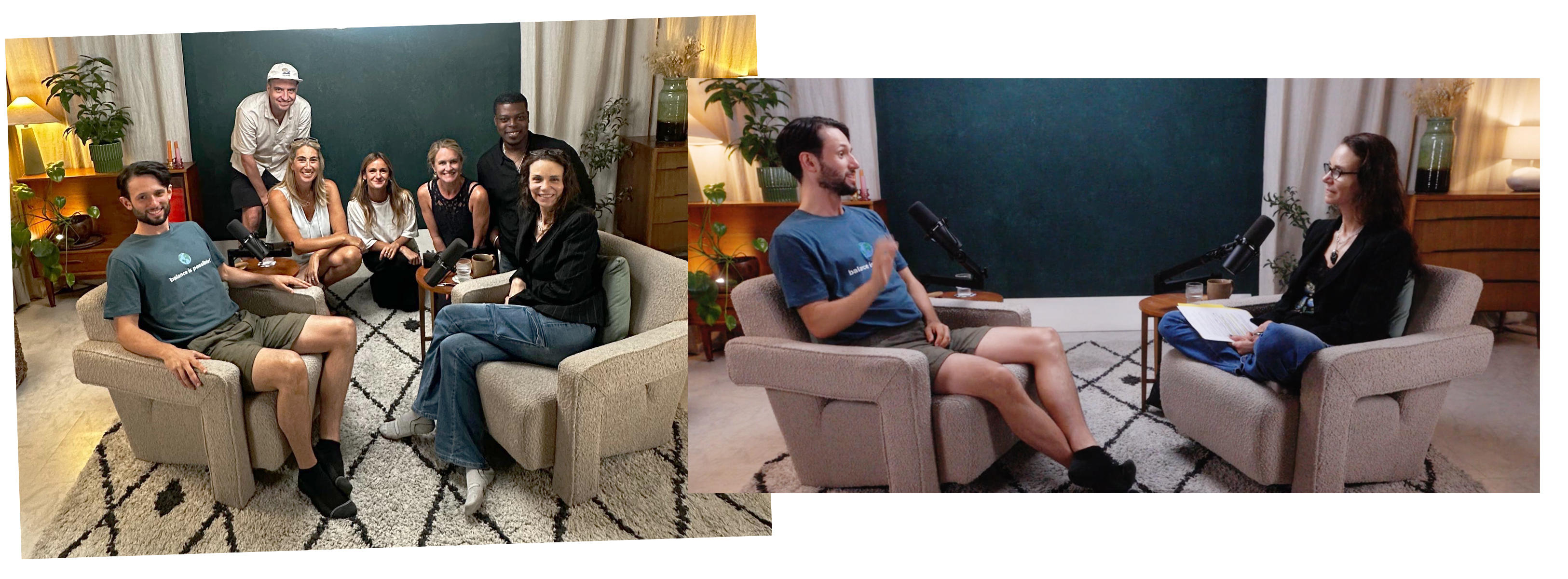
When George and I met, he spoke like someone still listening, still adjusting, still discovering how to meet life without trying to dominate it.
That feels deeply aligned with Wonderstruck, not expertise for its own sake, but the discovery of the sheer wonder of being through struggle and curiosity.
— Elizabeth Rovere

Did You Know…
✦ Though it appears gentle, Tai Chi originated as a martial art. Its slow movements were never meant as disguise, but as training to cultivate sensitivity, balance, and the ability to respond to force without meeting it head-on.
✦ The Wudang Mountains in Hubei Province, China, are among the most important centers of Daoism and internal martial arts.
✦ Daoism emerged in China around the 4th–3rd century BCE, with teachings attributed to Laozi and later expanded by Zhuangzi, who used paradox and humor rather than instruction manuals.
“Happiness is the absence of the idea of happiness.” — Zhuangzi
“The softest thing in the world overcomes the hardest.” — Laozi
We’d love to know what you think of the episode. Drop us a comment on YouTube, Apple Podcasts, Spotify, Instagram, or here on Substack. Thanks for listening with us.
I just watched this episode - it was such a rich conversation. I have been a meditator for many years and fully embrace the teachings of Buddhism and Daoism. It was wonderful to hear George talk about the wisdom of these traditions and how it relates to the uncertainty of this moment.