
This month’s episode is a special one for me. I traveled to Arlington, Virginia to sit with my longtime mentor in Lacanian group analysis, Macario Giraldo. Macario and his wife, Mabelle, have been married for over fifty years, a fact that radiates from the warmth of their home. There’s a steadiness to their presence and when you walk in, something in you settles.
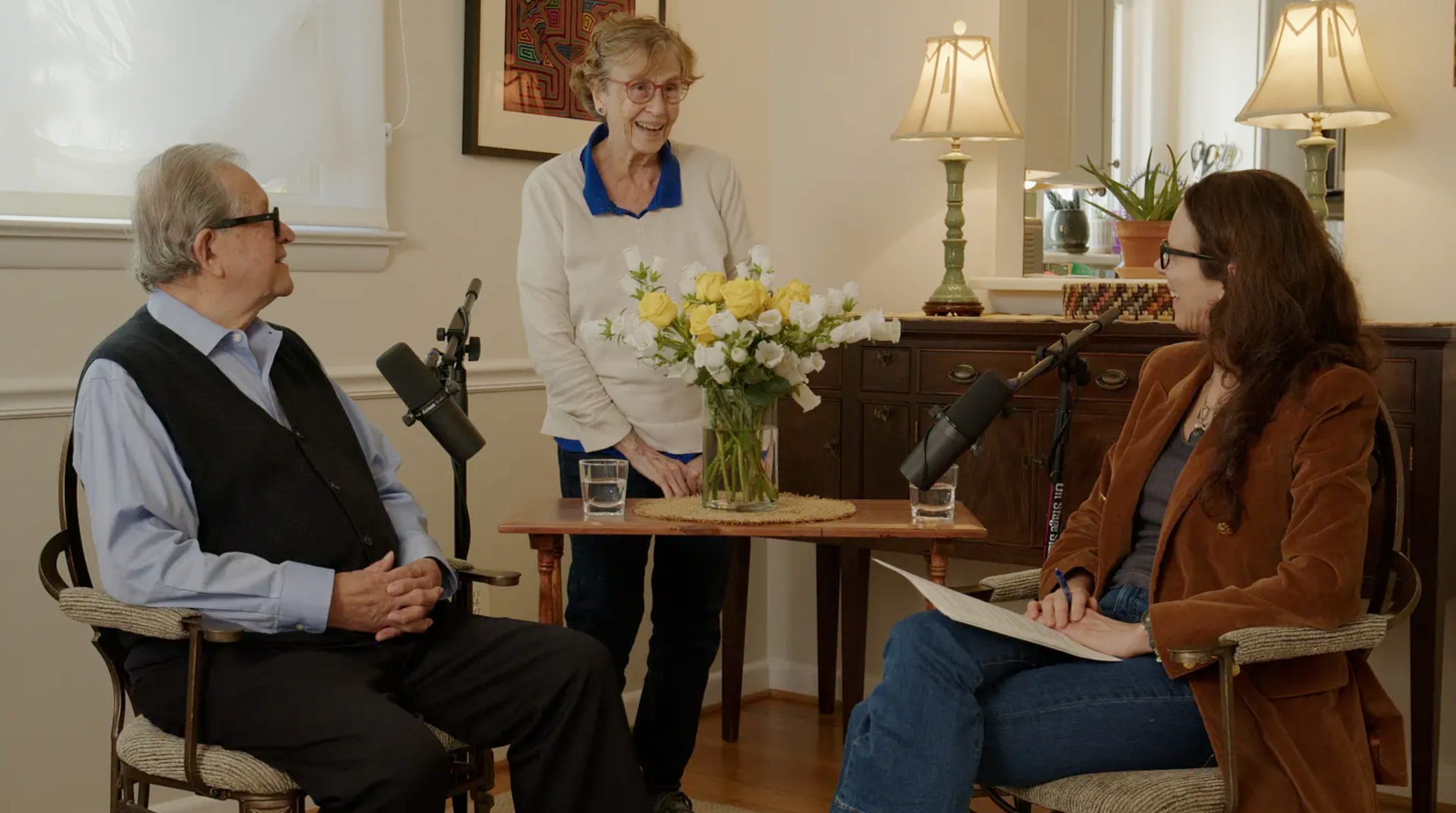
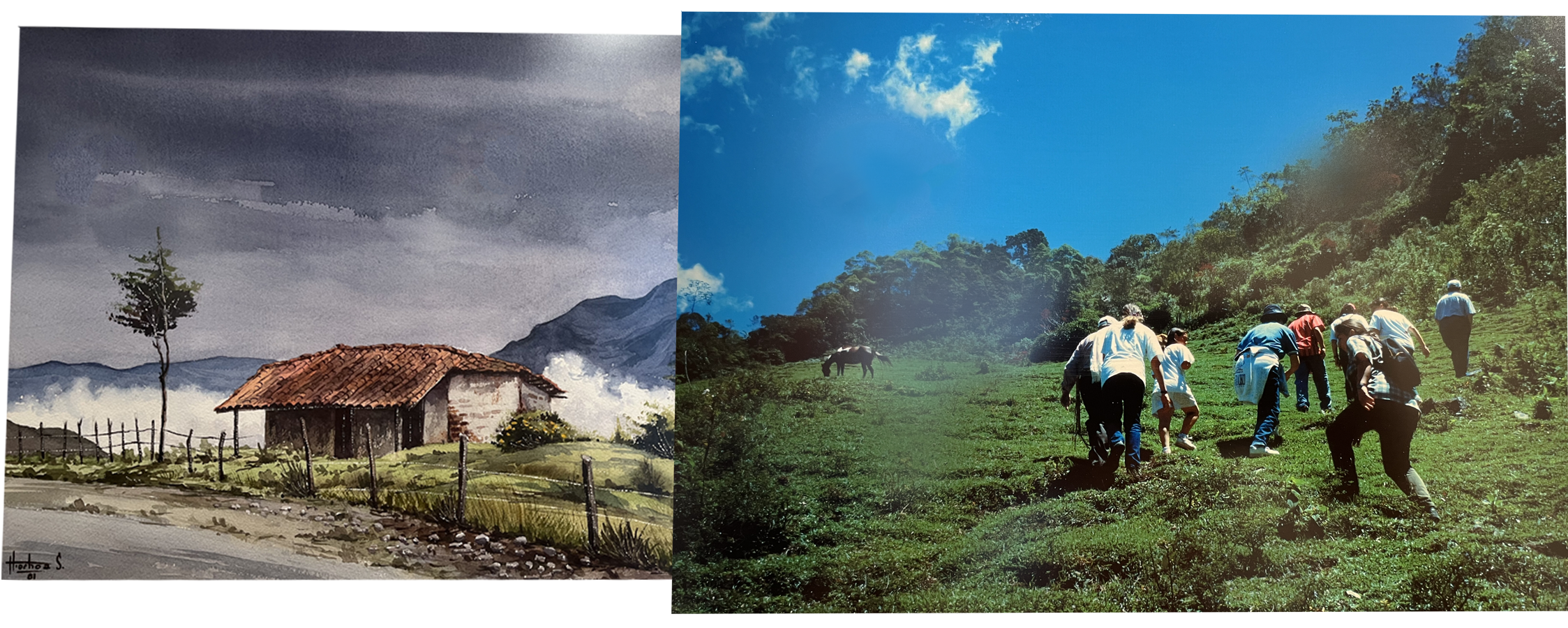
Macario grew up working on a coffee farm in rural Colombia. He later joined the Christian Brothers, a Catholic religious order of laymen where he took vows and received an education, and because life is never linear he realized he wanted a traditional family (He now has 5 grandchildren!). This required formal dispensation from the Church (the word for this is laicization, if you enjoy learning obscure but strangely satisfying terms), and he told me about the migraines he developed while worrying that choosing love and family might actually condemn him. Imagine wanting a family and fearing the underworld would be your punishment. Yet somehow the man sitting before me is one of the calmest, most grounded people I know.
From there, he received a prestigious Fulbright scholarship to Georgetown, became a psychologist, and ultimately a Lacanian analyst. What’s extraordinary, and very Macario, is that he took the inward-looking, often solitary terrain of Lacan and applied it to the living, breathing dynamics of groups, building on influential British psychoanalyst Wilfred Bion’s early group work from the 1940s. He writes in his book, Dialogues in and of the Group: Lacanian Perspectives on the Psychoanalytic Group, “Group is of the most marvelous and extraordinary of gatherings,” as though describing a favorite fruit rather than a centuries-old psychological enigma. ;)
Sitting in his living room, we talked about the things that matter most: God, death, the Real, family, responsibility, and what makes one truly alive. Not theoretically alive, actually alive. The kind of alive you feel when you stop outsourcing meaning to other people and begin paying attention internally, inside of yourself.
At one point we wandered into Lacan’s strange cameo in political history, the 1968 moment when he reminded a group of fiery French student protestors that every revolution, sooner or later, finds a new master. “You will get one,” he said, not as cynicism, but as a kind of truth about human structure. It’s funny because it’s true: we demand freedom, then immediately search for a container to hold the overflow of our own intensity. You don’t have to wear black and smoke Gauloises to get this; you live it every time total freedom starts to feel suspiciously like chaos.
This is what I love about Macario. He brings these abstract ideas back into the room, back into the body, back into the everyday. With him, jouissance isn’t a concept, it’s the familiar too-muchness that shows up in longing, in family life, and in desire. He renders the complicated stuff human, which might be the rarest gift of all.
Our conversation moved through memory, faith, doubt, grief, and the sheer wildness of becoming who you are. Macario has lived several lives, and somehow, he holds them all with a quiet humor and a sense of gratitude.
This episode is a window into a man who has devoted his life to understanding what moves through us not to control it, not to tame it, but to listen to it. And in listening, to help others hear themselves.
I hope you enjoy this episode. It’s not just an interview. It’s a glimpse into a mind and heart formed by rural Colombia, vows, fear, freedom, love, and the extraordinary thing we call group: a place where we learn, again and again, the peculiar ways we become ourselves.
With wonder,
Elizabeth

We’d love to know what you think of the episode. Drop us a comment on YouTube, Apple Podcasts, Spotify, Instagram, or here on Substack. Thanks for listening with us.